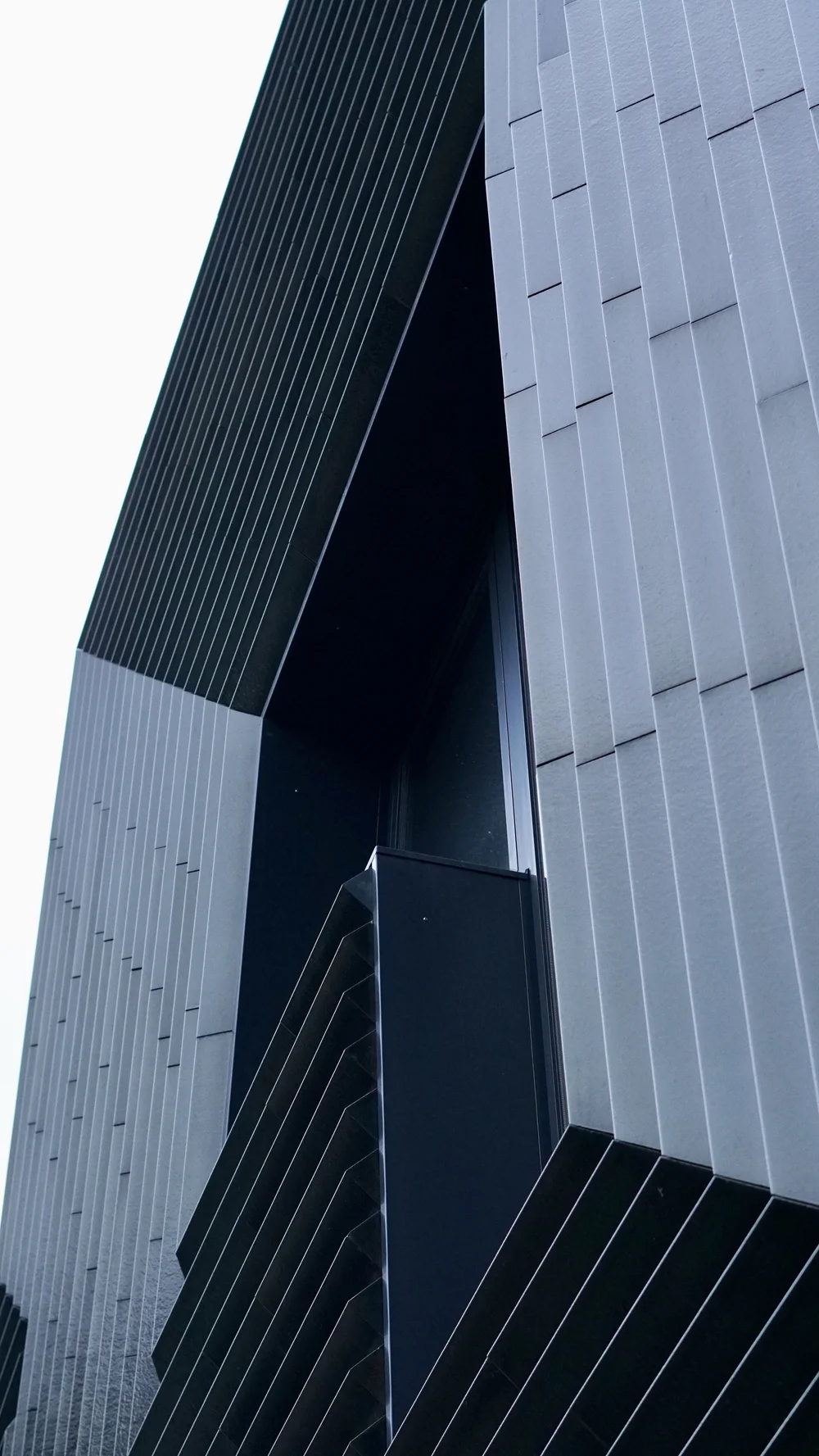
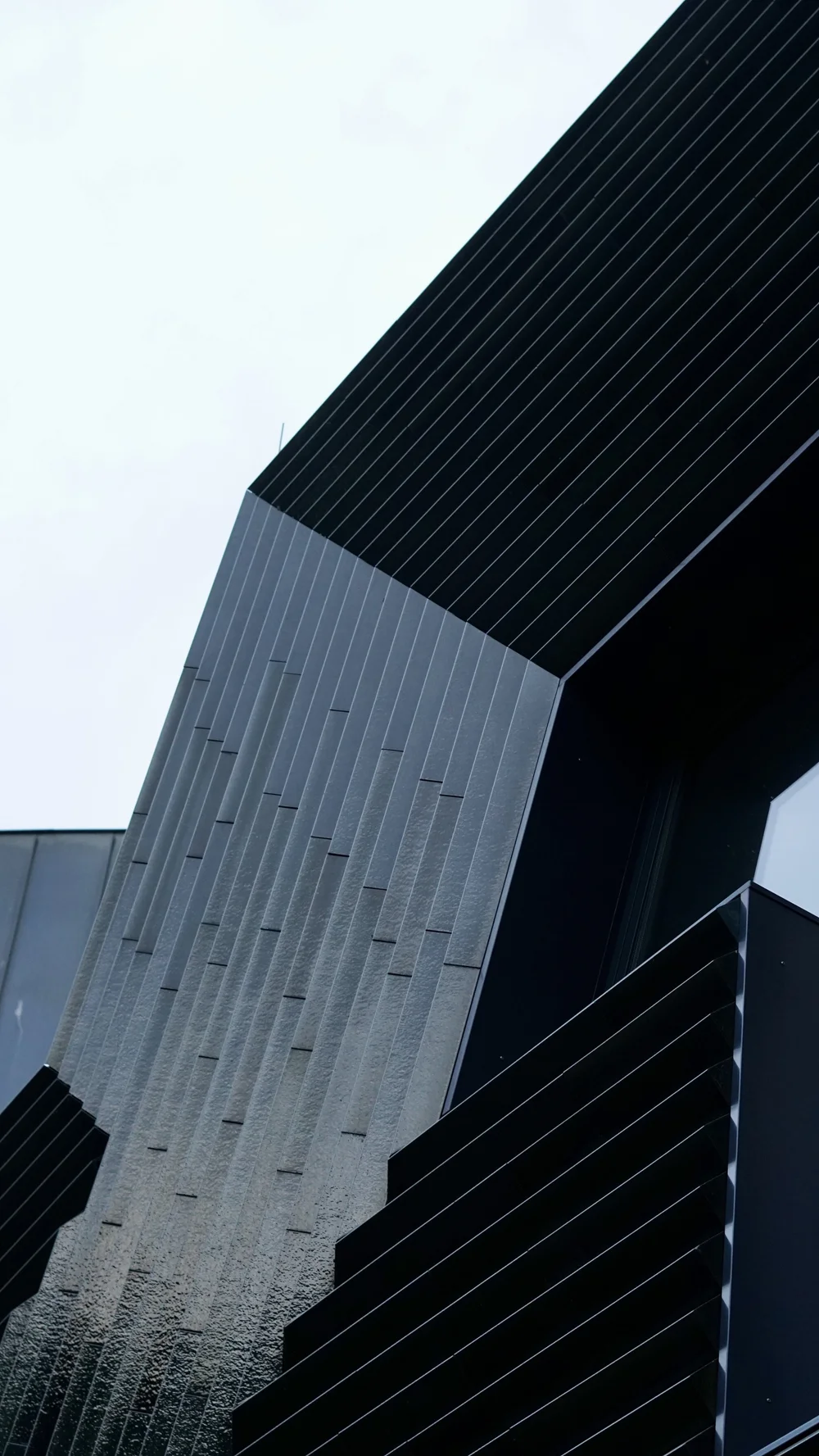
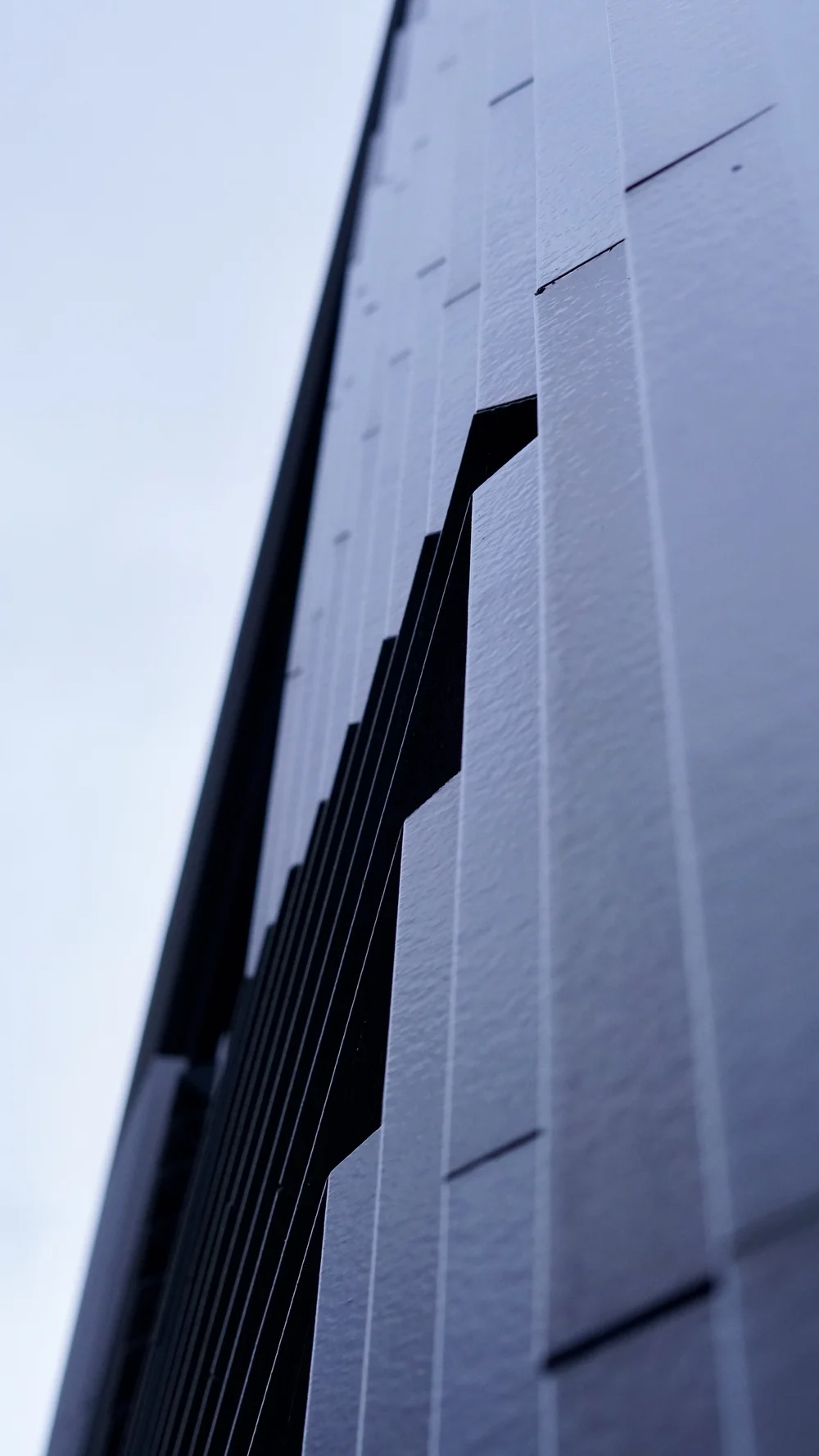
The synagogue in Mainz's Neustadt district immediately attracts attention through its faceted architecture and distinctive turquoise green surface. Depending on the perspective, contours, planes and reflections of light change. At times the building appears closed and monumental, at others open and almost sculptural.
The photographs engage precisely with these shifts. Wide views show the synagogue's presence in the urban space, while closer details concentrate on material, edges and transitions. Light and perspective are not used for staging, but as a means of making the building's particular formal language visible.
Manuel Herz's new building opened in 2010 on the site of the main synagogue built in 1912 and destroyed in 1938. Its form derives from the five Hebrew letters of the word “Kedushah”, meaning sanctification. Fragments of the colonnade of the previous building, rediscovered in 1988 and installed as a memorial, stand on the forecourt. In the photographs, the new building and the preserved fragment therefore meet directly. Present and memory do not stand beside one another, but occupy the same place.